Why Is Italy Called Italy?
The story behind the name Italia.
Italy.
We say the name and immediately think of Rome, Venice, Florence, Sicily, the Alps and the Mediterranean. A boot-shaped peninsula that seems to have carried the same name forever.
But it hasn’t.
Long before Italia became the name of the country we know today, the word belonged to a much smaller piece of land in the far south of the peninsula.
And behind those six letters lies a story of ancient peoples, Greeks and Romans, bulls and calves, legends, political identity and a name that slowly travelled north.
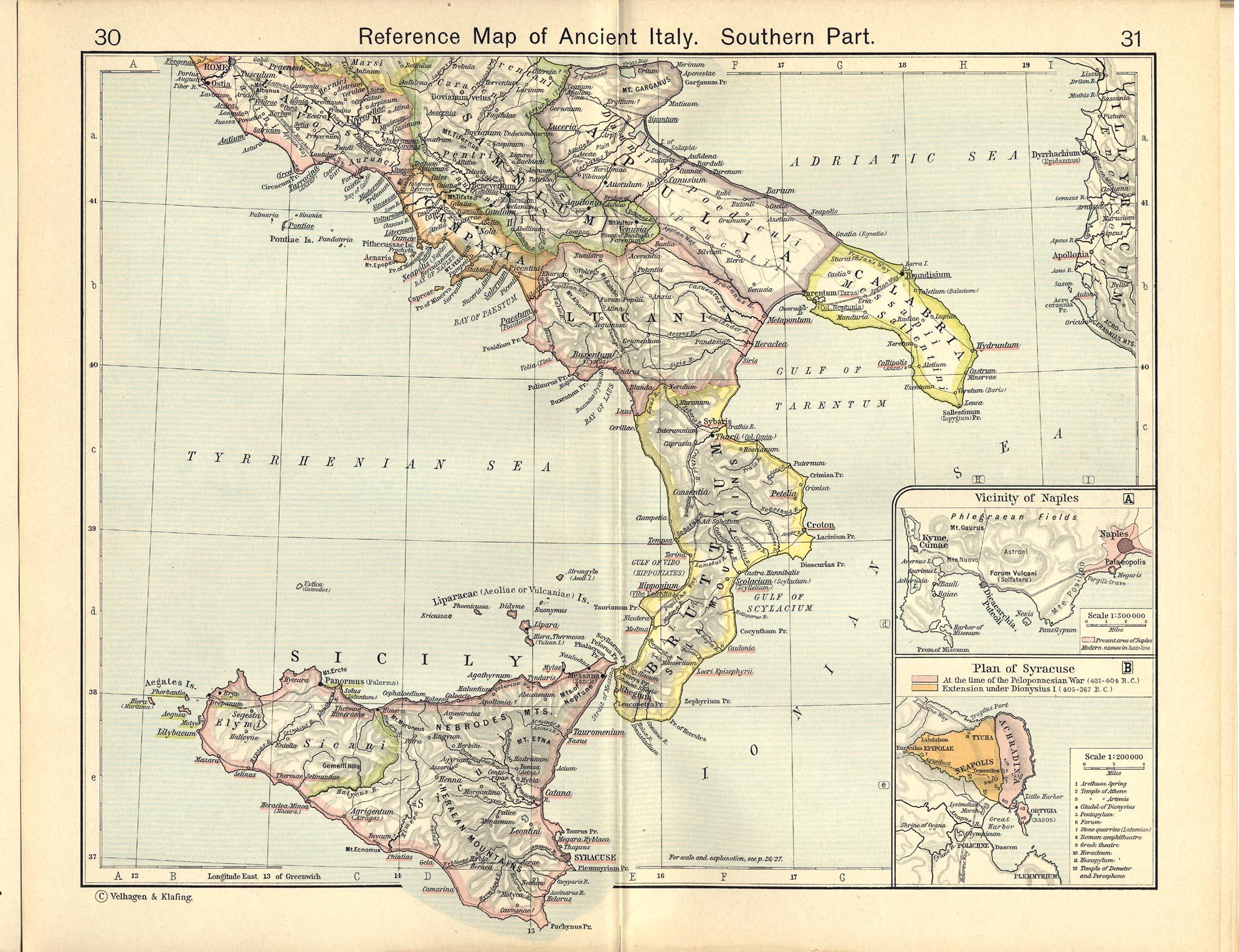
If we could travel back more than two thousand years and ask someone to point to Italia on a map, they would not necessarily point to the whole peninsula.
The earliest geographical use of the name referred to the extreme south, particularly an area corresponding to part of present-day Calabria.
Over the centuries, however, the name began to travel.
As political and geographical boundaries changed, Italia gradually moved northwards with them. By the Roman period it had come to describe an increasingly large part of the peninsula, and eventually its geographical meaning reached as far as the Alps.
The name of a small southern territory had become the name of an entire land.
But where did the word Italia come from?
One of the most fascinating explanations takes us to an ancient Italic language: Oscan.
At the centre of the discussion is the word Víteliú.
It has been connected with words referring to a calf or young cattle, including the Latin vitulus. This has led to the famous interpretation of Italia as something similar to “land of calves”, or perhaps the land of a people whose identity was associated with the bull or calf.
It is an evocative possibility. Before Italy became inseparable from the Roman wolf, its name may already have carried the image of cattle and the landscapes of the South.
But there is an important detail: the exact origin of the word Italia is still debated. The connection with Víteliú and vitulus is an important historical hypothesis, not a certainty.
Ancient writers had another explanation.
According to a tradition reported in antiquity, there was once a ruler called Italus — Italo in Italian — who ruled over part of the extreme south of the peninsula.
The land, the story says, took its name from him: Italus → Italia.
Was Italus a real king, a legendary figure or simply the memory of an older people transformed into a person through storytelling?
We cannot know for certain.
Ancient cultures often explained the origins of places through kings, heroes and myths. The story of Italus therefore lives somewhere between history, language and legend.
There was even another ancient tradition involving Heracles and an escaped animal. In that story, one of the cattle being driven by Heracles ran away, and the local word associated with the animal supposedly became connected with the name of the territory.
It sounds more like mythology than linguistics — and it is. Yet it is striking that ancient traditions repeatedly connected the name of Italy with cattle.
And then, centuries later, the bull appears again.
When a name became an identity
Around 91 BC, several peoples of the Italian peninsula rebelled against Rome in what we now call the Social War.
These communities had fought alongside Rome, but many of them still did not enjoy the same political rights as Roman citizens. The conflict therefore became more than a military rebellion. It was also a struggle over identity, belonging and citizenship.
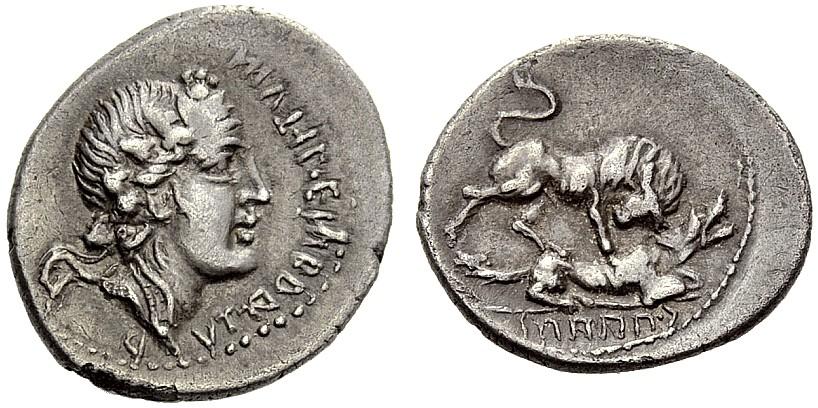
The rebels minted their own coins.
And on some of them appeared the name VITELIU.
On others appeared: ITALIA.
Two languages. Two forms of a name.
The rebel coinage also used powerful symbols, including the Italic bull confronting the Roman wolf.
By this point, Italia was no longer simply the name of a geographical area.
It had become a statement of identity.
A word that had once belonged to a small corner of the South was now being used to express the idea of a much larger community.
Its journey continued.
With Roman expansion and political change, the geographical meaning of Italia extended progressively across the peninsula. In the first century BC, northern territories were incorporated into Roman Italy, bringing the name towards the Alps.
This is easy to forget today.
We look at the modern map and see Italy as something obvious: a single shape, a single name, a single country.
For the ancient world, it was not.
The word grew with history.
Empires disappeared. Borders moved. Latin changed into new languages. The peninsula was divided into kingdoms, republics, duchies and states for centuries.
Yet the old name remained.
When political unification created the Kingdom of Italy in 1861, the new country did not need to invent a name for itself.
It inherited one that was already more than two thousand years old.
And in Italian, unlike English Italy, French Italie or German Italien, we still say:
Italia.
A word whose exact birth remains partly mysterious, but whose journey can be followed from the landscapes of ancient southern Italy to the name of a modern nation.
Perhaps it once evoked a calf. Perhaps it remembered a people associated with the bull. Perhaps ancient storytellers preserved something through the legendary figure of Italus.
We may never recover the very first moment in which someone pronounced the name.
But we do know something extraordinary:
Italia did not begin as the name of a country. It became one.
Una risposta