Why Italians Never Order Cappuccino After Lunch
Is it a rule, a tradition or simply an Italian habit? Discover the cultural reason behind one of Italy’s most famous coffee customs.
You have just finished a delicious plate of pasta in a small restaurant in Florence. The waiter smiles and asks whether you would like a coffee. You confidently reply:
The waiter pauses for a second and smiles politely. No one is offended, and your cappuccino will probably arrive without any problem. Still, the waiter may already know that you are not Italian.
Ordering a cappuccino after lunch is not forbidden. It is simply one of those unwritten cultural habits that most Italians follow without even thinking about it.
Is cappuccino after lunch actually forbidden?
No. There is no law, no official rule and no reason to feel embarrassed. Italian cafés serve cappuccino throughout the day, especially in tourist areas.
The difference is much simpler: most Italians naturally associate cappuccino with breakfast rather than with the end of a meal.
Why is cappuccino considered a breakfast drink?
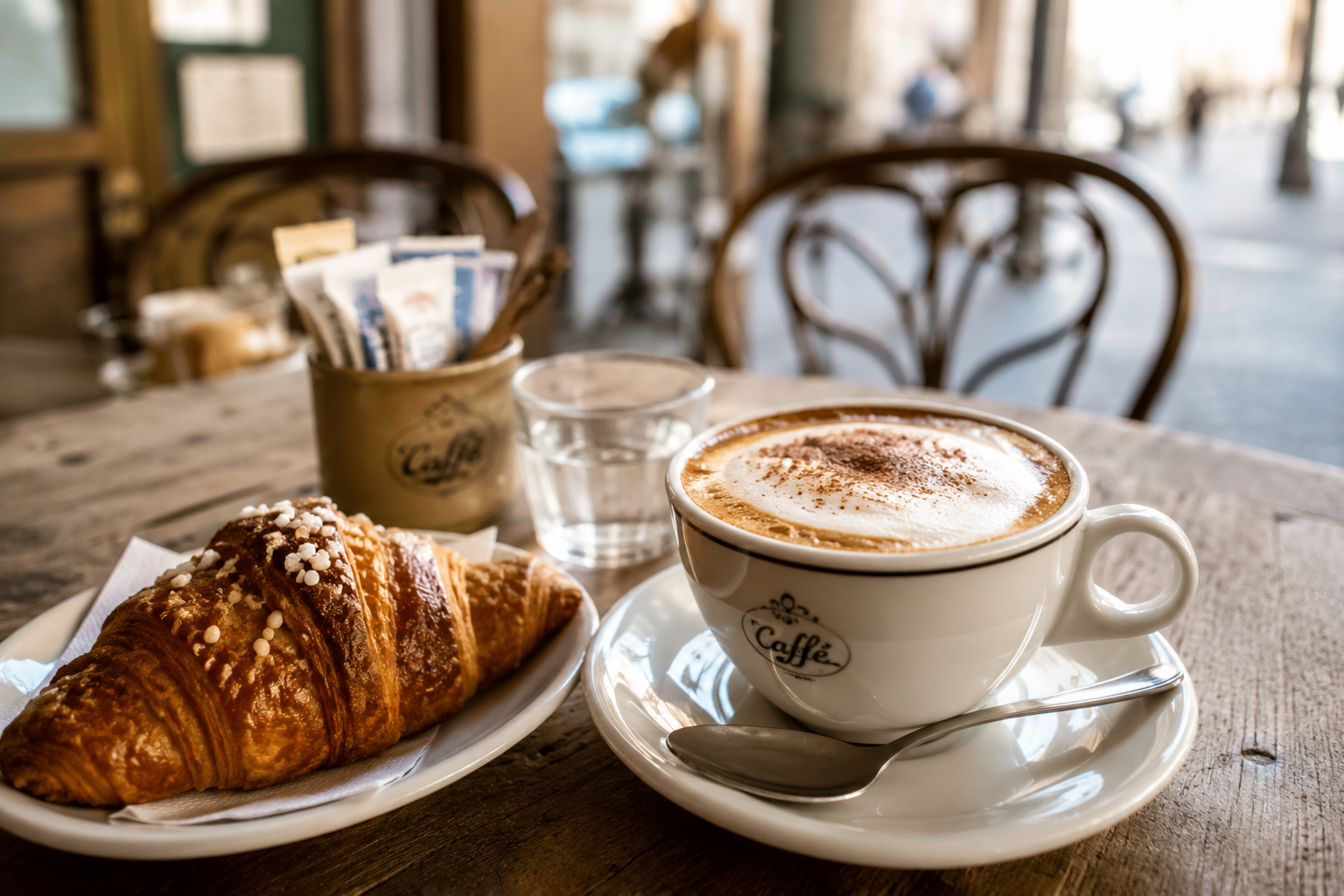
A traditional Italian breakfast is often light and sweet. It may consist of a cappuccino together with a cornetto, biscuits or a small pastry.
Milk is considered filling, so after lunch or dinner many Italians prefer something smaller and stronger. The purpose of coffee at the end of a meal is usually to close the meal, not to make it heavier.
For this reason, they are more likely to order:
- un caffè, which normally means an espresso;
- a caffè macchiato;
- a caffè corretto;
- or simply no coffee at all.
The Italian espresso ritual
In Italy, coffee is not always something to sip slowly for twenty minutes. It is often a small and quick daily ritual.
Many Italians walk into a café, greet the barista, order un caffè, drink it standing at the counter and continue with their day.
The ritual is fast, social and deeply connected to everyday Italian life. Even a coffee that lasts less than a minute can create a moment of connection.
But Italians love cappuccino
Cappuccino is one of the most loved breakfast drinks in Italy. It is not considered strange or foreign. The important detail is simply the time of day.
A cappuccino and a cornetto belong to the morning. Pasta, lunch and an espresso belong to another moment. Ordering a cappuccino after a complete meal combines two rituals that Italians normally keep separate.
Are there exceptions?
Of course. Not every Italian follows the same habits. Some people drink cappuccino in the afternoon, especially on weekends or during holidays. Children may also drink milky coffee later in the day.
Italy is a diverse country, and cultural habits are never absolute. This is a general custom, not a strict rule.
Should tourists avoid ordering cappuccino after lunch?
Not at all. You should order the drink you genuinely enjoy.
Understanding the custom simply allows you to recognise the cultural meaning behind an everyday choice. These small details help you experience Italy not only as a visitor, but through the habits of the people who live there.
The word cappuccino is linked to the Capuchin friars. The colour of coffee mixed with milk was thought to resemble the brown robes traditionally worn by the monks.
Useful Italian phrases
In the morning, you can enter an Italian café and say:
After lunch, an Italian is more likely to say:
In this context, un caffè normally means an espresso.
So, what would you order?
Would you follow the Italian custom and choose an espresso, or would you still order your favourite cappuccino?
Learn Italian through real culture
At My Italian Space, learning Italian is not only about grammar. It is also about understanding the traditions, habits and everyday expressions that bring the language to life.
Book your Italian lesson